 English
 Français
 Español

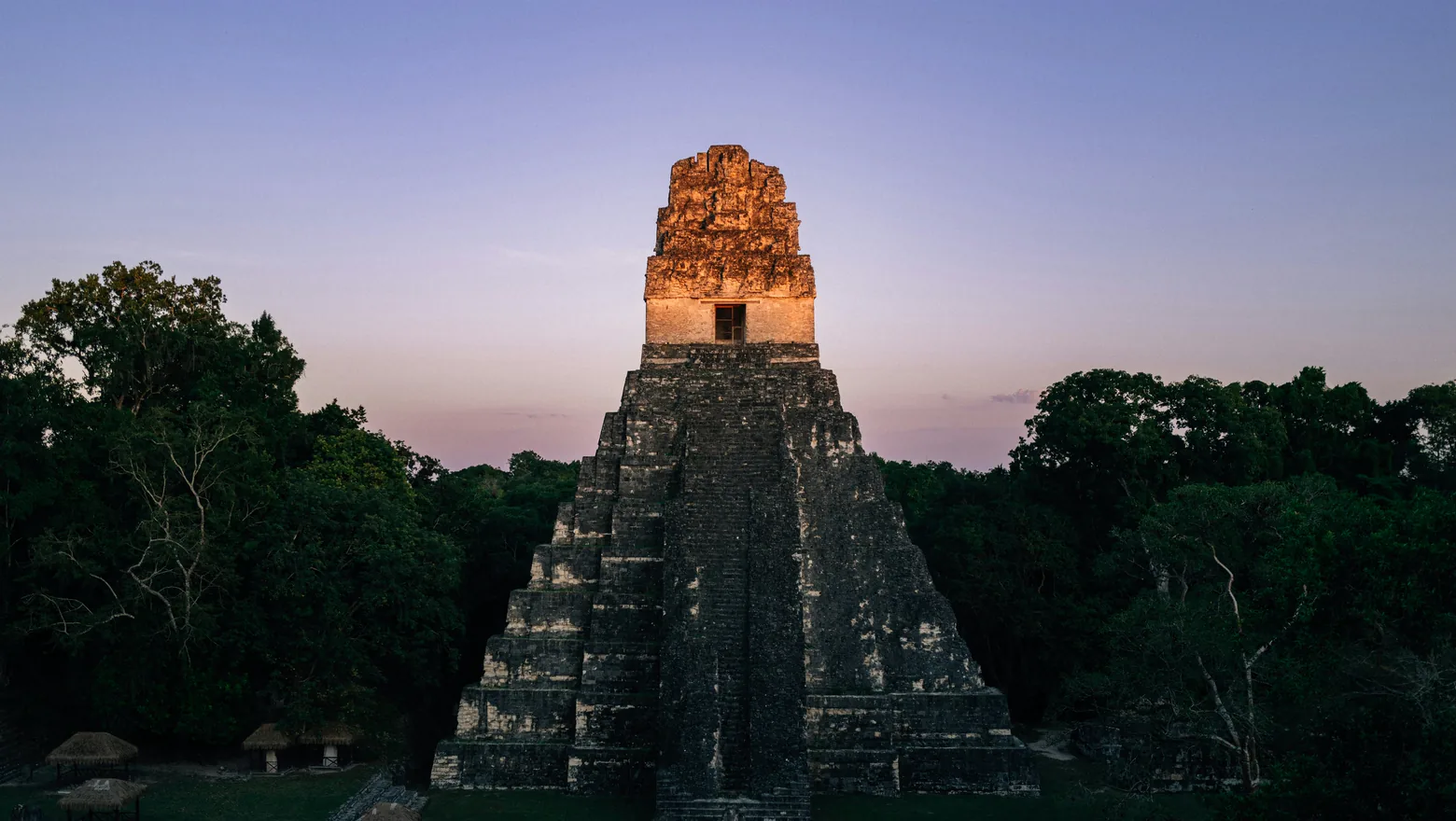
Guatemala is nicknamed “the land of eternal spring”, and the name suits it well. Between smoking volcanoes, high-altitude lakes, colonial towns and Maya cities swallowed by the jungle, this small Central American country packs in astonishing diversity, carried by a Maya culture that is very much alive: more than twenty Maya languages are spoken here, and markets, textiles and ceremonies still set the rhythm of life in many villages.
Here is the twelve-day itinerary we recommend for a first discovery, with the right pace, the experiences not to miss and our practical tips.
The itinerary at a glance
- Days 1 to 3: Antigua Guatemala and its volcanoes.
- Day 4: Chichicastenango market, then Lake Atitlán.
- Days 5 and 6: the Maya villages of Lake Atitlán.
- Day 7: flight to Flores, in the Petén region.
- Days 8 and 9: Tikal and Yaxhá, the great Maya cities.
- Days 10 and 11: Río Dulce and Livingston, or Semuc Champey.
- Day 12: back to Guatemala City and departure.
Days 1 to 3: Antigua, the colonial beauty
About an hour from Guatemala City airport, Antigua is one of the most beautiful colonial towns in the Americas. The former capital of the Kingdom of Guatemala, devastated by the earthquakes of 1773 and then abandoned in favour of today’s capital, it has kept its cobbled streets, pastel façades, baroque churches and ruined convents, now a UNESCO World Heritage Site. Three volcanoes watch over it: Agua, the still-active Fuego and Acatenango.
Not to be missed:
- The Santa Catalina Arch with Volcán de Agua behind it, early in the morning before the visitors arrive.
- The Cerro de la Cruz viewpoint, which takes in the whole town at the foot of the volcano.
- The ruins of the Capuchinas convent and the cathedral, where nature is reclaiming its rights.
- A morning at a coffee finca: Antigua coffee, grown in volcanic soil, is among the best in the country.
For a first approach, our Antigua colonial heritage tour gives you all the keys to the town. Thrill-seekers can set aside half a day for the Pacaya volcano hike, accessible to all, or, for strong walkers, two days for the Acatenango and Fuego expedition: a night at nearly 4,000 metres facing Fuego’s eruptions, one of the most powerful experiences in Central America.
Day 4: Chichicastenango and the road to the lake
Head up to the highlands early. On Thursdays and Sundays, Chichicastenango hosts one of the most colourful markets on the continent: embroidered textiles, wooden masks, fruit, flowers and pottery spread out in joyful chaos. On the steps of the Santo Tomás church, worshippers burn copal incense in rituals that blend Maya and Catholic traditions. If your dates don’t match, head straight to Lake Atitlán.
Days 5 and 6: Lake Atitlán
Framed by three volcanoes — Tolimán, Atitlán and San Pedro — Lake Atitlán is often cited among the most beautiful lakes in the world. The writer Aldous Huxley compared it to Lake Como, with a few volcanoes added. The Maya villages around it are explored by boat, each with its own character:
- San Juan La Laguna, with its women’s weaving cooperatives using natural dyes, its murals and small coffee and chocolate workshops.
- Santiago Atitlán, the largest village on the lake, where you visit Maximón, a folk saint venerated in a different house each year.
- Santa Cruz La Laguna, clinging to the hillside, for its view and tranquillity.
- San Marcos and San Pedro, more bohemian, for kayaking and swimming.
Our tip: get up before dawn for the Indian Nose hike, whose summit offers a spectacular sunrise over the lake and its volcanoes. The water is also calmer in the morning for boat crossings. Our Lake Atitlán cultural villages tour lets you meet the communities in depth.
Day 7: flying to the Petén
Return to Guatemala City for a domestic flight of about an hour to Flores, in the Petén region. A complete change of scenery: you leave the highlands for the rainforest. Flores, a small colonial island of colourful houses on Lake Petén Itzá, is a charming base for the following days. End the day with a sunset over the lake.
Days 8 and 9: Tikal and Yaxhá
In the heart of a national park of dense forest, Tikal is one of the largest cities of the Maya civilisation and a World Heritage Site. Its pyramid temples rise out of the canopy, while howler monkeys, toucans and coatis bring the trails to life. The Great Plaza, framed by the Temple of the Great Jaguar and the Temple of the Masks, is breathtaking; Temple IV, the tallest on the site, offers a unique view of the pyramid tops piercing the jungle.
Set off at dawn: the light, the cool air and the sounds of the forest at sunrise make the visit unforgettable. The next day, head to Yaxhá, a more discreet site on the shore of a lagoon, for sunset from the top of its main temple. Our Tikal National Park expedition departs from Flores with a specialist guide.
Days 10 and 11: two ways to end on a high
Caribbean option: Río Dulce and Livingston
Head east to the Río Dulce, whose jungle-covered banks form a spectacular canyon. By boat, you pass the Castillo de San Felipe, an old Spanish fort, hot springs and stilt villages, all the way to Livingston on the Caribbean Sea. This is home to the Garífuna community, with its music, dances and cuisine, such as tapado, a seafood soup made with coconut milk.
Nature option: Semuc Champey
More remote, Semuc Champey is a natural limestone bridge beneath which the Cahabón river rushes, topped by a series of turquoise pools you can swim in. Access is by 4×4 tracks, and exploring the K’anba caves by candlelight completes the adventure. Allow two nights on site.
Day 12: return and departure
Head back to Guatemala City for your international flight. If your schedule allows, a final night in Antigua, more pleasant than the capital, is a lovely way to end the trip.
When to go to Guatemala
The dry season, from November to April, is the most pleasant time to travel, with clear skies over the volcanoes. The rainy season, from May to October, mostly brings late-afternoon showers and lush green landscapes, with fewer visitors. Holy Week, in March or April, is an exceptional time in Antigua: processions and carpets of coloured sawdust and flowers fill the streets, a tradition recognised by UNESCO. You then need to book very far in advance.
Good to know before you go
- Entry requirements: citizens of many countries, including most of Europe, do not need a visa for a tourist stay. Check the current rules for your nationality; our visa assistance service can help.
- Getting around: roads are winding and distances deceptive. A private driver is by far the most comfortable and safest option.
- Altitude and climate: Antigua and Lake Atitlán lie at around 1,500 metres; bring a light sweater for the evenings, and lightweight clothes for the Petén and the Caribbean.
- Money and practicalities: the currency is the quetzal; keep cash for markets and villages. Tap water is not drinkable.
- Volcano hikes: always with a licensed guide, checking the weather and volcanic activity.
Frequently asked questions
Are twelve days enough to discover Guatemala?
It is an ideal length for a complete first trip. With ten days, focus on Antigua, Lake Atitlán and Tikal; with two weeks, add both end-of-trip options.
Can Guatemala be combined with Mexico?
Yes: the Petén is close to Mexico’s Yucatán, and you can extend the trip to the beaches of the Riviera Maya. Read our Yucatán and Riviera Maya guide to imagine what comes next.
Is Guatemala suitable for a family trip?
Yes, at the right pace: boats on the lake, chocolate and coffee in Antigua, monkeys and temples at Tikal delight children and parents alike.
Discover our Guatemala tour and our excursions on site, or contact us to build your tailor-made itinerary: we adapt every stage to your pace, your wishes and the season.