 English
 Français
 Español

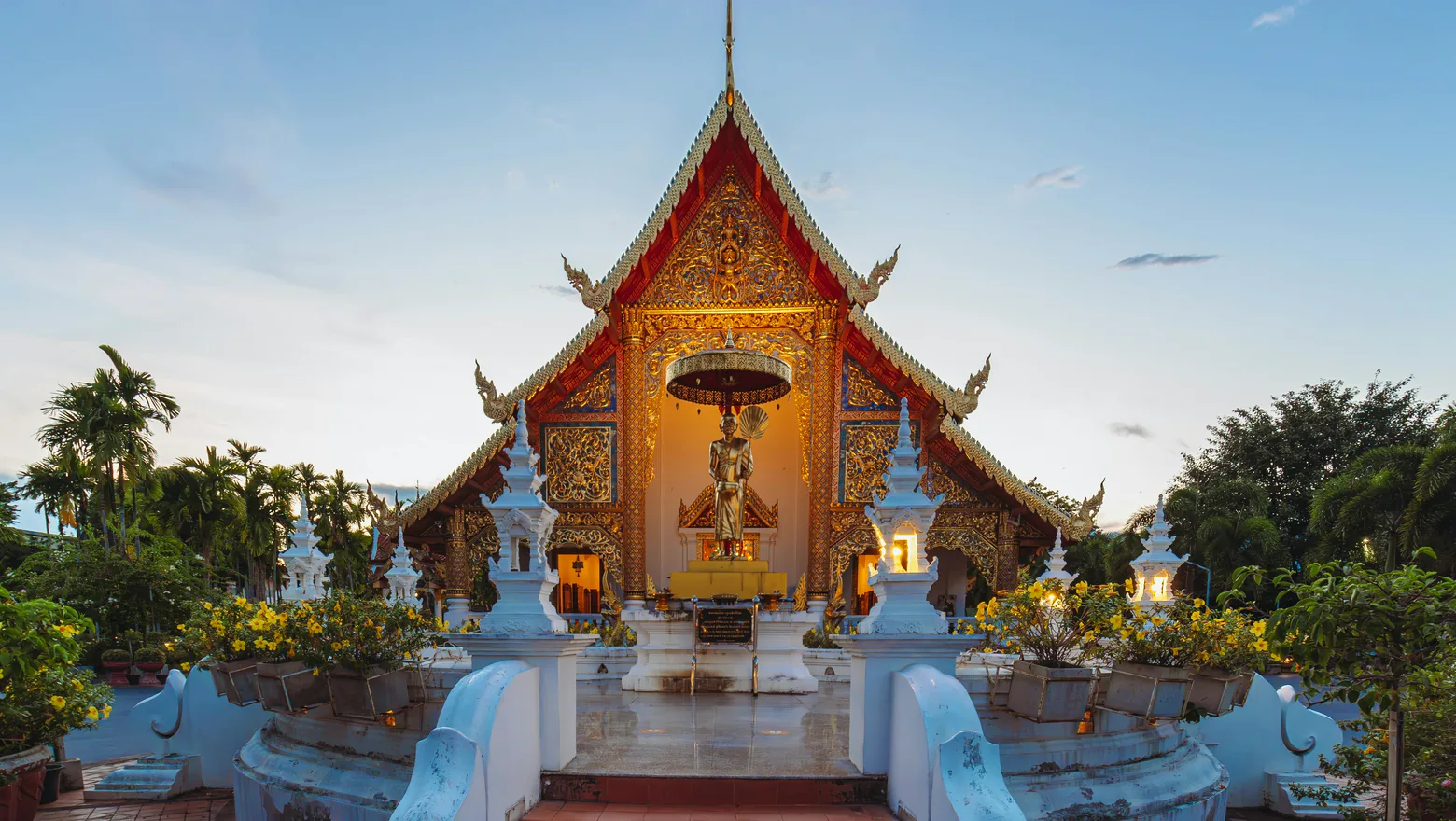
Thailand has a rare talent for offering everything in a single trip: gilded temples and an electric capital, mountains covered in jungle and rice terraces, one of the most flavourful cuisines in the world, and then islands with limestone cliffs plunging into turquoise water. All with a hospitality that has earned the country its nickname, “the land of smiles”.
Two weeks is the ideal length for a first discovery that sacrifices neither culture nor beach. Here is the itinerary we recommend, stage by stage.
The itinerary at a glance
- Days 1 to 3: Bangkok, its temples, canals and tables.
- Day 4: Ayutthaya, the former royal capital.
- Days 5 to 7: Chiang Mai and the mountains of the north.
- Day 8: Chiang Rai and its spectacular temples.
- Days 9 to 13: the islands of the Andaman Sea.
- Day 14: back to Bangkok and departure.
Days 1 to 3: Bangkok, the capital of contrasts
Bangkok disconcerts at first, then captivates. Start with the historic heart: the Grand Palace and the Temple of the Emerald Buddha, Wat Pho and its huge reclining Buddha, then cross the Chao Phraya river by boat to Wat Arun, whose porcelain-studded towers are stunning at sunset.
The next day, explore the khlongs, canals lined with stilt houses, visit Jim Thompson’s house and its tropical garden, then dive into Chinatown after dark for an evening of street food. Bangkok is also a major food capital, from neighbourhood stalls to acclaimed restaurants, and its rooftop bars offer striking views over the illuminated city.
Our tip: for temples, shoulders and knees must be covered. Visit early in the morning, before the heat and the crowds, and travel by river rather than through the traffic jams.
Day 4: Ayutthaya, the old capital
About an hour and a half north of Bangkok, Ayutthaya was for more than four centuries the capital of the Kingdom of Siam, one of the richest cities in Asia. Its ruins, a World Heritage Site, form a landscape of stupas, prangs and brick Buddhas. The most famous image: a Buddha head entwined in tree roots at Wat Mahathat. You can return to Bangkok by boat along the river.
Days 5 to 7: Chiang Mai, the gentle north
A flight of just over an hour takes you to Chiang Mai, the great city of the north, with a far more relaxed pace. The old town, surrounded by moats and walls, has dozens of temples, and Wat Phra That Doi Suthep, perched on the mountain, offers a magnificent view of the valley.
This is the ideal region for a Thai cooking class on a farm, a hike to mountain villages, or a visit to an ethical elephant sanctuary, where you observe the animals without riding them. Try khao soi, the curry noodle soup typical of the north, and stroll through the Sunday night market. In November, the Yi Peng lantern festival fills the sky with thousands of lights.
Day 8: Chiang Rai and the Golden Triangle
Three hours’ drive north, Chiang Rai is home to two extraordinary temples: Wat Rong Khun, the White Temple, a contemporary work by a Thai artist, dazzling white and inlaid with mirrors, and the Blue Temple, decorated in sapphire and gold. Further north, the Golden Triangle marks the meeting point of Thailand, Laos and Myanmar on the Mekong. From Chiang Rai, a flight, direct or via Bangkok, then takes you south.
Days 9 to 13: the islands of the Andaman Sea
Time for the sea. On the Andaman coast, limestone cliffs rise from emerald water and the beaches are among the most beautiful in Asia. Several bases are possible depending on what you’re looking for:
- Krabi and Railay, for spectacular cliffs, climbing and boat trips to the Hong or Phi Phi islands.
- Koh Yao Noi, in the heart of Phang Nga Bay, for a village atmosphere and incredible views of the karst pinnacles.
- Koh Lanta, for its long, quiet beaches and family-friendly feel.
- Phuket, for its grand hotels, pool villas and dining scene, provided you choose your beach well.
A day on a private boat in Phang Nga Bay, among sea caves and islets, is a highlight of the trip. Some very popular natural sites, such as Maya Bay, are subject to restrictions or temporary closures to protect the environment: we adapt excursions accordingly.
Day 14: return and departure
Fly to Bangkok for your international connection. If time allows, a final evening by the river is a lovely way to end.
When to go to Thailand
- November to February: the ideal season for most regions, drier and less hot.
- March to May: the hot season, still pleasant on the Andaman coast until April.
- June to October: monsoon on the Andaman coast. The Gulf of Thailand islands, such as Koh Samui and Koh Tao, then become a better option, with more favourable weather.
Good to know
- Entry requirements: citizens of many countries can enter visa-free for a tourist stay; the rules change regularly, so check them before you leave.
- Getting around: domestic flights are short and frequent, and a private driver makes transfers easy.
- Local customs: never touch people’s heads, remove your shoes before entering a temple or a home, and remember that the royal family is held in great respect.
- Money: the Thai baht; cards are accepted in hotels and restaurants, but cash remains useful at markets.
Frequently asked questions
Are two weeks enough?
Yes, for a first trip balanced between culture and beach. With ten days, drop Chiang Rai and shorten the beach stay; with three weeks, add a second island or the lesser-known northeast.
Is Thailand good for a honeymoon?
It is one of our favourite destinations for couples: villas with private pools, dinners on the beach, exceptional spas. It features in our selection of the most beautiful honeymoon destinations.
And for families?
Absolutely: varied food, a warm welcome, safe beaches and plenty of activities. We adapt the pace and accommodation to the children’s ages.
Visit our Thailand destination page and contact us to build your itinerary: hand-picked hotels, domestic flights, private guides and tailor-made experiences, at the pace that suits you.