 English
 Français
 Español

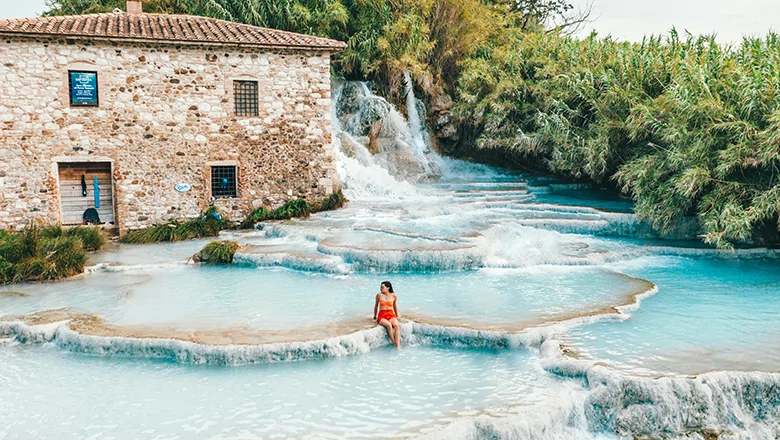
Italy is not a destination so much as an accumulation of sensations that settle in and never leave. The smell of coffee in a Roman side street at eight in the morning. The golden light sliding across the Tuscan hills late in the afternoon. The silence of a Florentine church on an October Tuesday. Some countries you visit; others change you. Italy firmly belongs to the second kind.
The challenge is not finding beautiful places — the country has hundreds — but choosing between them. Here is our selection of the ten places that, in our view, best capture Italy’s diversity, from the Alpine north to the Mediterranean south, with tips on how to experience each one to the full.
1. Rome, the city that talks
Rome is a never-ending conversation between past and present. The Pantheon is almost two thousand years old and still opens its doors every morning; scooters weave around the Colosseum; children play a stone’s throw from the Forum. This coexistence of the very old and the very alive is what makes Rome unique — and sometimes a little dizzying.
Our tip: book timed-entry sights well ahead (the Colosseum, the Vatican Museums and the Borghese Gallery, where reservations are compulsory), then keep your late afternoons free. Rome truly reveals itself when you wander through Trastevere at aperitivo time or have dinner in Testaccio, the neighbourhood Romans themselves favour for traditional cooking.
2. Florence, for lovers of beauty
Florence is a city for the eyes. The marble façade of Santa Maria del Fiore, the galleries of the Uffizi, Michelangelo’s David at the Accademia, the view from Piazzale Michelangelo at sunset: everything seems to have been arranged to be looked at. The museums are extraordinary, but the city itself is an open-air museum.
Climb the 463 steps of Brunelleschi’s dome early in the morning, then cross the Arno to the Oltrarno, the artisans’ quarter, where bookbinders, gilders and leatherworkers still ply their trade in workshops that open onto the street.
3. Venice, the city that slows you down
No cars, no horns: in Venice you hear water lapping against stone and footsteps on bridges. You don’t so much visit the city as cross it on foot, deliberately getting lost in the calli of Cannaregio or Dorsoduro, away from the Rialto–St Mark’s axis.
Good to know: day-trippers now have to pay an access fee on certain busy days. Staying overnight exempts you — and, above all, gives you the best of Venice, early in the morning and in the evening, when the city empties out. Set aside half a day for the lagoon islands: colourful Burano, Murano and its glassmakers, and Torcello with its almost forgotten Byzantine basilica.
4. Tuscany and the Val d’Orcia, for rest
After the intensity of Rome and Florence, Tuscany offers something else: peace. The Val d’Orcia, a UNESCO World Heritage Site, is Tuscany exactly as you picture it — rolling hills, lines of cypresses, lonely farmhouses perched on the ridges. Pienza and Montalcino follow one another within a few kilometres, with Montepulciano standing guard at the valley’s edge, each with its own wine and its own table.
Add Siena and its shell-shaped Piazza del Campo, and San Gimignano for its medieval towers, ideally late in the day once the coach tours have left. Tuscany is best savoured slowly, from a villa or wine estate you return to every evening.
5. The Amalfi Coast, a film that never ends
It is hard to describe the Amalfi Coast without resorting to superlatives. Cliffs plunge into an improbably blue sea, and villages clinging to the rock seem to defy gravity. Positano for the postcard, Amalfi for its history as a maritime republic, Ravello for its hanging gardens and the Terrace of Infinity at Villa Cimbrone.
Our tip: the coast road is spectacular but congested in high season, when traffic is regulated. The boat is often the best way to get around, and a day on a private boat to Capri remains one of the finest memories you can bring back from Italy. Walkers should not miss the Path of the Gods, high above the sea between Agerola and Nocelle.
6. The Cinque Terre, five villages, one way of life
Monterosso, Vernazza, Corniglia, Manarola, Riomaggiore: five colourful villages clinging to the cliffs of the Ligurian Sea, linked by footpaths and a railway line rather than by road. Vines grow on narrow terraces carved into the rock, and time seems to flow differently.
To avoid the cruise crowds, stay in one of the villages or nearby (Levanto, Portovenere) and set out on the trails early. Some paths charge an entry fee and are covered by the Cinque Terre Card, one version of which also includes the train between villages.
7. Lake Como, pure elegance
Framed by mountains and aristocratic villas, Lake Como is Italy at its most refined. Bellagio at the tip of the lake, Varenna and its stepped lanes, Tremezzo and Villa Carlotta, Villa del Balbianello and its loggia suspended above the water: everything is discovered by boat, to the rhythm of the ferries criss-crossing the lake.
It is the perfect final stop for a trip through the north, barely an hour from Milan, and one of Europe’s most beautiful escapes for two.
8. The Dolomites, sculpted mountains
A UNESCO World Heritage Site, the Dolomites are mountains like no others: towers of pale rock that turn pink at sunset, a phenomenon the Ladin people call enrosadira. Val Gardena, Alta Badia and Cortina d’Ampezzo are the main gateways, each with mountain hotels and huts where you lunch facing the peaks.
Summer, from late June to September, is the season for hikes to the Tre Cime di Lavaredo or the Seceda plateau; in winter, the Dolomiti Superski area is one of the largest in the world. A different Italy — Alpine, gourmet and incredibly photogenic.
9. Puglia, the authentic south
The heel of the boot was long the Italians’ own secret. The cone-roofed trulli of Alberobello, the white town of Ostuni, Polignano a Mare perched on its cliffs, baroque Lecce, nicknamed the “Florence of the South”: Puglia combines heritage, crystal-clear sea and a cuisine built on simple, remarkable produce.
You stay in masserie, old fortified farmhouses turned into charming hotels among the olive groves. Just across the border, in Basilicata, Matera and its cave dwellings are worth the trip on their own.
10. Sicily, an island-continent
Sicily is a world of its own. Taormina and its ancient theatre facing Mount Etna, Syracuse and the island of Ortigia, the baroque towns of the Val di Noto, the Valley of the Temples in Agrigento, Palermo and its markets: in ten days you travel through three thousand years of Greek, Arab, Norman and Spanish history.
The island is at its best in spring and autumn, when the heat is gentle and the sea stays warm enough for swimming until October.
When is the best time to visit Italy?
- April to June: the best time for the art cities, Tuscany and the Amalfi Coast, with pleasant temperatures and nature in bloom.
- July and August: intense heat in the south and peak crowds, especially around 15 August. Favour the mountains, the lakes and hotels with a pool.
- September and October: our favourite season. The sea is warm, the grape harvest brings Tuscany and Piedmont to life, and the light is superb.
- November to March: ideal for Rome, Florence and Venice without the crowds, and for skiing in the Dolomites.
How long should you stay?
For a first trip, allow ten to twelve days for the classic trio: Rome (three nights), Florence and Tuscany (four to five nights), then Venice (two nights), linked by fast and comfortable high-speed trains. With two weeks you can add the Amalfi Coast or head south to explore Puglia and Sicily. Our golden rule: fewer stops, more time at each.
Frequently asked questions
Which region should I choose for a first trip to Italy?
The Rome–Florence–Venice triangle remains the ideal introduction, rounded off with a few nights in Tuscany to slow down. If you already know these cities, Lake Como, Puglia or Sicily offer a more intimate Italy.
Do I need to rent a car?
Not for the cities, where the train is simpler, nor for Venice or the Cinque Terre. Tuscany, Puglia, the Dolomites and Sicily, however, are far better explored by road, with a rental car or a private driver.
Is Italy a good destination for families?
Absolutely: Italians adore children, the food pleases everyone and distances are short. The lakes, the Dolomites in summer and Puglia’s masserie with pools are particularly well suited.
At Rumboé, we design fully tailor-made trips to Italy, from the great art cities to the most discreet addresses. Explore our Italy destination page, our Tuscany honeymoon, our Amalfi Coast honeymoon or our family tour, then tell us about your plans: we reply within 24 hours.